Why relevance at work needs both a spirit and a body
A pastor who trained as a doctor says relevance at work needs spiritual pillars (priestly practices and prophetic assistance) and physical ones (competence, character, courage).
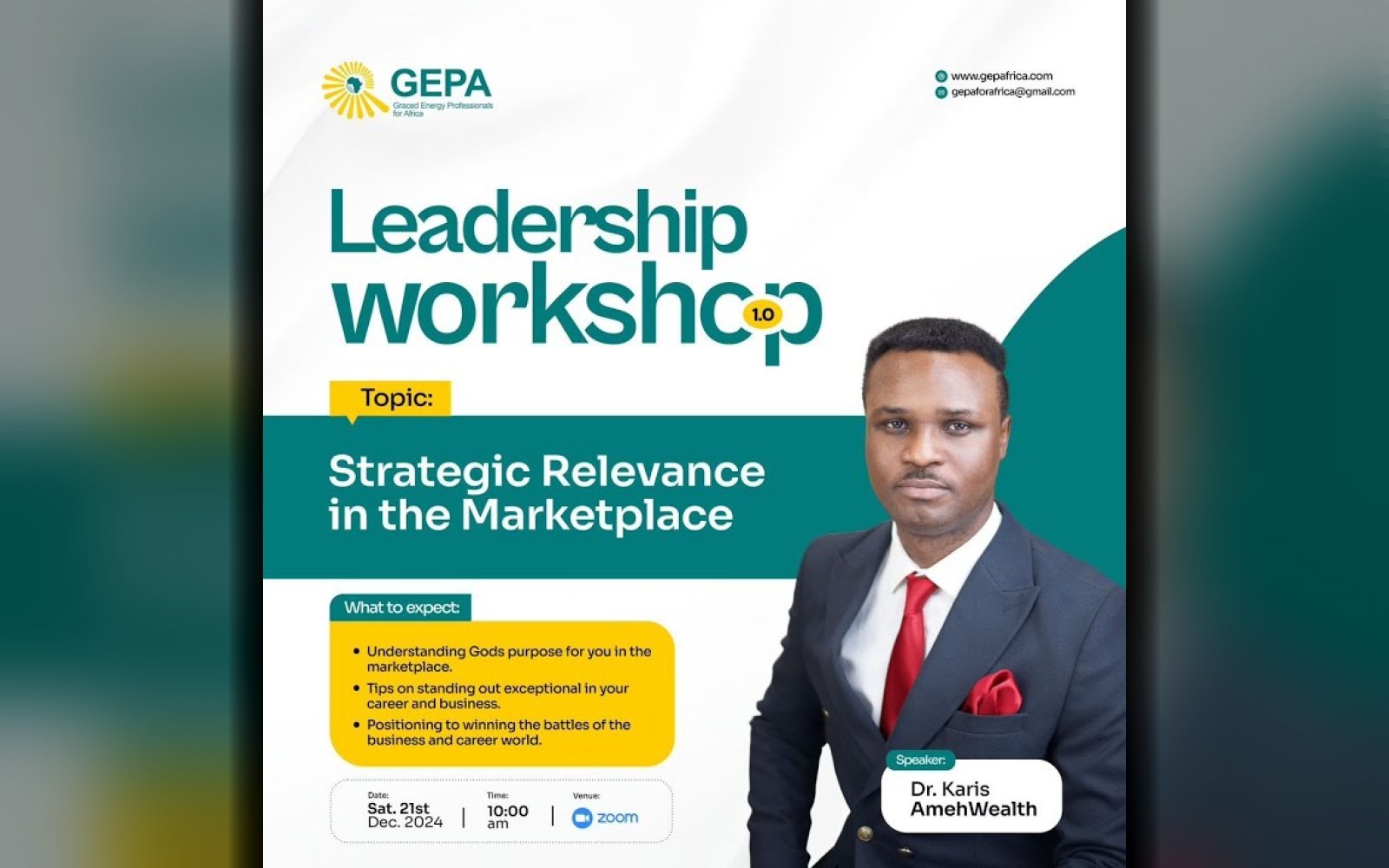
Many Christians at work lean hard to one side. Some pray and fast but neglect industry competence, leadership skill and networking. Others have the certifications and the industry knowledge but neglect the spirit. A guest speaker at GEPA's December leadership workshop, a pastor, mentor and coach who trained as a medical doctor, argued that relevance comes only from the two working together.
His teaching is explicitly Christian, though he says its pillars apply to everyone, not only to believers.
A career as a place of mission
The speaker began with Isaiah chapter 2, which he reads as saying that much of God's work among the nations in this season will run through believers in business and the professions. A career still provides for a family, but in his framing it is also a place of mission.
His examples are three figures who were not pulpit ministers: Joseph, counsellor to Pharaoh; Deborah, who led a nation; and Daniel, whose influence wrote the knowledge of God into Babylon. To anyone worried about provision, his answer was that the greater includes the lesser.
Why relevance needs a spirit and a body
The framework comes from James 2:26: a body without the spirit is dead. Reading it as a young pastor and doctor, the speaker says he also heard the reverse, that a spirit without a body has no relevance on the earth. Anything that is to matter needs both; in his own ministry, the body meant leadership, structure and developing people.
He treats the spiritual side as the root of a tree: unseen, but holding up everything that is visible. Africa, he said, is a highly spiritual environment, and a believer who is naive about that may pay for it.
Priestly practices and prophetic assistance
The first spiritual pillar is what he calls priestly practices: a believer's structured interaction with God. The first of these is a personal prayer altar, marked by consistency and sacrifice. His model is Daniel, who prayed three times a day as his settled custom.
His first marketplace example is Strive Masiyiwa, the founder of Econet, who by the speaker's account prayed at his office from Friday to Monday while taking his own head of state to court over a refused telecoms licence.
Alongside the altar he named:
- time in the word, where one insight can change a career
- giving in all its forms, since every believer is a royal priest
- service in church and community
- praise
His governing rule is that a practice with no routine around it is not really being practised. When nothing is working, he tells professionals to switch deliberately between fasting, prayer, giving and praise rather than repeat what has failed.
The second pillar is prophetic assistance. In Ezra, the builders prospered through the prophesying of Haggai and Zechariah, so the speaker asks each professional who is speaking over their work. His picture is Joshua fighting on the field while Moses held up his hands, a partnership between marketplace and pulpit. The promised land had giants, he reminded listeners, and so does the energy sector.
Competence, character and courage
The physical pillars are three Cs. Competence means industry-specific knowledge and leadership skill, pursued aggressively. Daniel and his companions were deeply spiritual and still ten times better in their field. Grace, the speaker argues, amplifies skill rather than replacing it, but only if you feed it by reading, studying and getting certified.
Character is the source of trust, which he ranks among the marketplace's top currencies. He compares it to a muscle: opportunities to compromise keep coming, and every refusal makes it stronger.
Courage he defines as the mental fortitude to dare. Without it, he says, progress has limits, and people, money and resources gather around those who step out before everything is in place. His closing image was Peter, who walked on water, began to sink, was lifted up and walked back to the boat. A courageous step that falters, he argues, still leaves you far ahead of those who never moved.